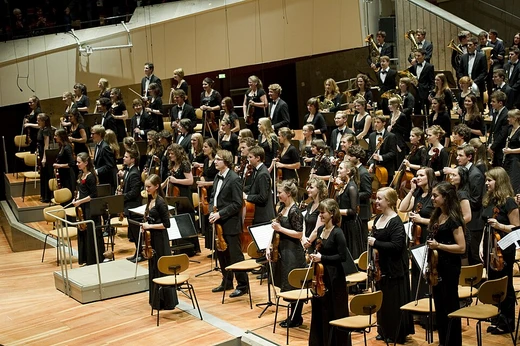
The Four Seasons (Vivaldi)
Four violin concerti evoking each season through music.

The Four Seasons (Italian: Le quattro stagioni) is a group of four violin concerti by Italian composer Antonio Vivaldi, each giving musical expression to a season of the year. The work is the best known of Vivaldi's compositions and stands as one of the earliest and most detailed examples of program music, with accompanying sonnets that elucidate the narrative elements evoked by the music.
- field
- Classical music
- nationality
- Italian
- known_for
- Four violin concerti representing the seasons, a landmark of program music
- opus_number
- Op. 8
Lore & Background
The inspiration is not the countryside around Mantua, as initially supposed. The concerti were a revolution in musical conception, representing flowing creeks, singing birds, a shepherd and his barking dog, buzzing flies, storms, drunken dancers, hunting parties, frozen landscapes, and warm winter fires. Unusually for the period, Vivaldi published the concerti with accompanying sonnets—possibly written by himself—that elucidated what the music was intended to evoke. Each concerto is divided into three movements (fast–slow–fast), and each linked sonnet into three sections. Vivaldi provided additional instructions such as 'The barking dog' and 'Languor caused by the heat.'
Reader's Guide
The Four Seasons is the best known of Vivaldi's works and a foundational example of program music—instrumental music intended to evoke extra-musical narratives. A performance of all four concerti may take about 40–43 minutes. Martin-in-the-Fields sold over half a million copies. The concerti remain a staple of the classical repertoire, noted for their vivid musical depiction of natural scenes and their integration of poetry and music.
Did You Know?
- Each concerto is accompanied by a sonnet, possibly written by Vivaldi himself, that explains the music's narrative.
Frequently Asked Questions
Why is The Four Seasons considered so important in classical music?
It is Vivaldi's best-known work and is widely cited as one of the earliest and most detailed examples of program music in the Western canon. Its vivid musical depiction of natural scenes—reinforced by accompanying descriptive sonnets—set a precedent for composers telling stories purely through instrumental sound.
What is the structure of The Four Seasons?
The work comprises four solo violin concertos—Spring, Summer, Autumn, and Winter—each following the standard three-movement concerto form. Short sonnets, traditionally attributed to Vivaldi, accompany each concerto and spell out the specific scenes, weather, and sounds the music is meant to evoke.
More in Classical Music 1-16
Spotted an error? Know more?
This is a living reference — every entry is fact-audited, and reader corrections feed straight into our audit queue. Suggest an edit · See this site's audit record